
What digital marketing really is, how channels and funnels work together, and how to build a clear system that turns attention into real customers instead of wasted clicks. Most online businesses don’t fail because of a lack of traffic, followers, or visibility. They fail because attention is not guided, educated, or converted...
What digital marketing really is, how channels and funnels work together, and how to build a clear system that turns attention into real customers instead of wasted clicks. Most online businesses don’t fail because of a lack of traffic, followers, or visibility. They fail because attention is not guided, educated, or converted...





How to Turn Digital Attention into Real Customers

Frank Arellano
Founder of Plexotrade LLCMost people believe their problem is a lack of traffic, followers, or visibility.
In reality, the real problem is not attention — it’s the absence of a system that transforms that attention into clients.
This article summarizes the core ideas of our masterclass and gives you a clear mental model to understand why most online businesses struggle to convert, and what actually works instead. A clear, practical framework for modern digital businesses.
Not tactics.
Not hacks.
A practical framework for modern digital businesses.
Digital marketing does not fail because of traffic. It fails because attention is unmanaged.
The Hidden Problem: Your Audience Has No Mental Model of Your Business
In traditional businesses, prospects already understand what they’re buying.
A lemonade stand doesn’t need education:
- People know what lemonade is
- They know why they want it
- They know what to expect
In digital businesses, the situation is radically different.
Most prospects:
- Don’t clearly understand their problem
- Haven’t named it yet
- Don’t know what solutions exist
- Don’t know why you are the best option
This means up to 90% of your audience is not ready to buy — and that’s normal.
The mistake is assuming they are.
If you have followers but no clients, you don’t have a product problem.
You have a business system problem.
What Digital Marketing Really Is (Without the Noise)
Digital marketing is often overcomplicated on purpose.
In reality, it’s very simple:
Digital marketing is the combination of channels and funnels that leads to sales.
Nothing more. Nothing less.
- Channels generate attention
- Funnels manage, nurture, and convert that attention
If either one is missing, the system breaks.
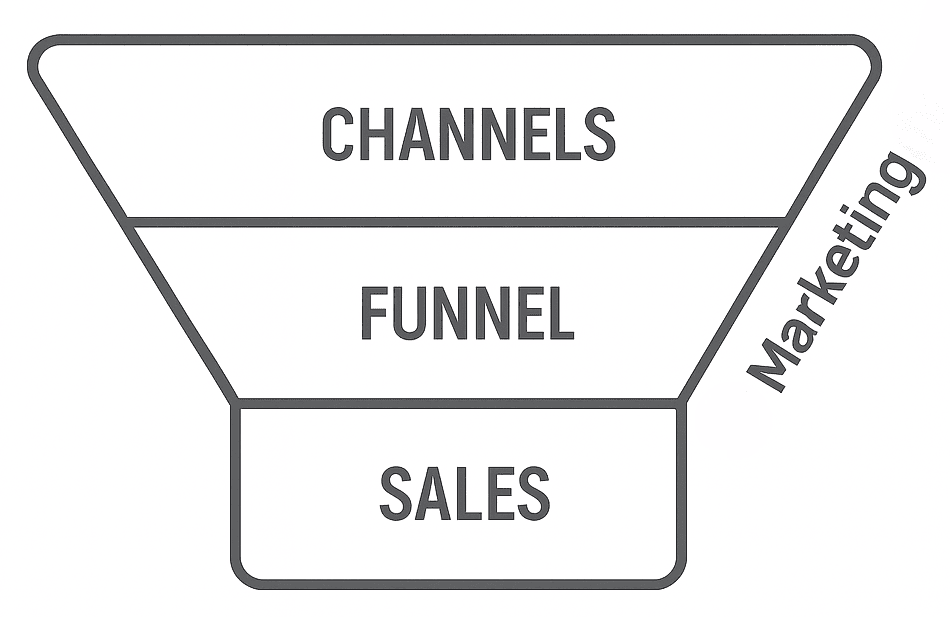
Channels: Where Attention Comes From
Channels are the places where you invest time, energy, or money in exchange for visibility.
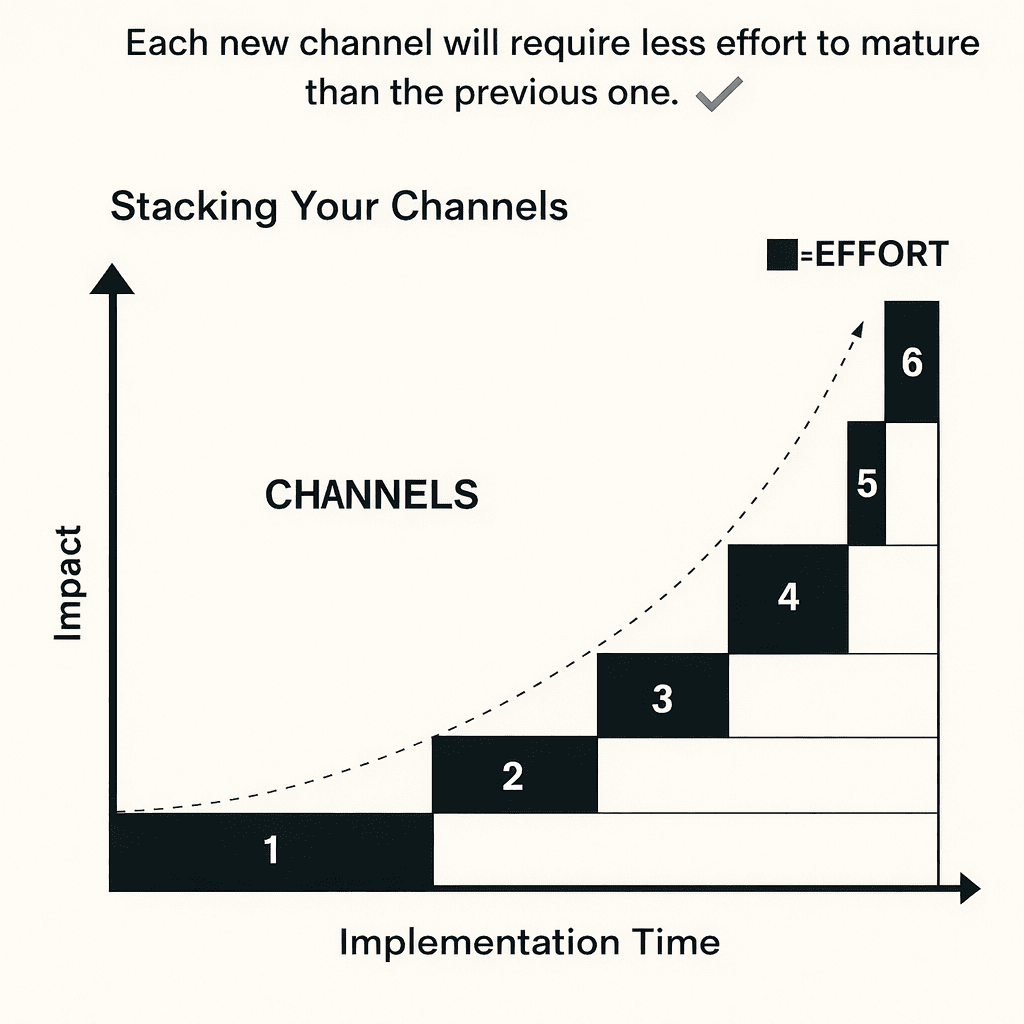
There are four core channels, and they should be activated in a logical order.
1. Earned Media (Always First)
This is attention you earn by providing value:
- Social media content
- YouTube, podcasts, blogs
- Appearing in other people’s audiences
- Partnerships and collaborations
Earned media is the hardest channel — and that’s why it builds the strongest foundation.
It creates trust before intent.
2. SEO (Intent-Based Attention)
SEO is not just technical optimization.
It’s about:
- Using the same language your prospects use
- Addressing problems they already search for
- Becoming discoverable when intent already exists
When done correctly, SEO compounds everything else.
It turns your content into an asset instead of a post.
3. Paid Advertising (Acceleration)
Paid ads don’t replace earned media — they amplify it.
They work best when:
- You already have authority
- Your messaging is validated
- Your funnels are functional
Ads accelerate what already works. They don’t fix broken systems.
4. Direct Sales & Outreach
Calls, emails, messages, and direct contact are extremely powerful — but only after trust exists.
When combined with the previous channels, conversion becomes dramatically easier.
Without context, outreach feels like pressure.
With context, it feels like help.
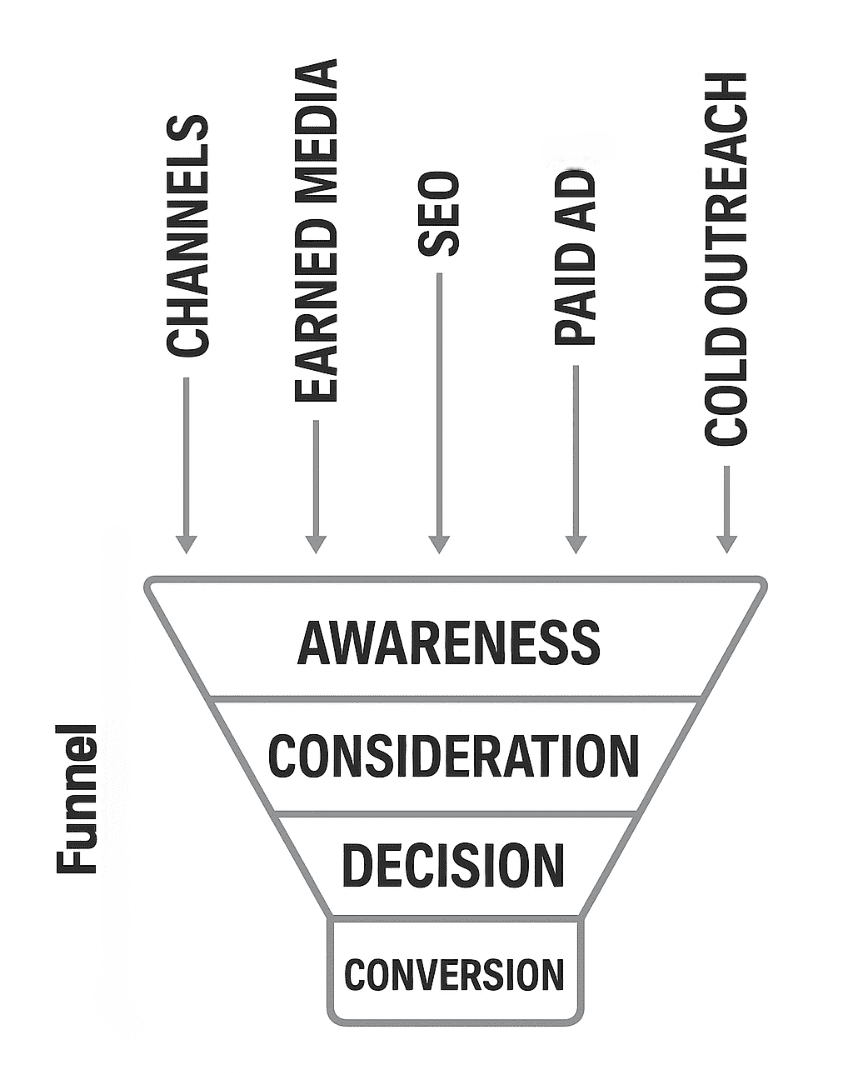
Funnels: Where Attention Becomes Clients
Channels bring people to you.
Funnels prevent them from leaving confused.
A funnel is not a page — it’s a guided learning experience that:
- Educates
- Structures understanding
- Builds trust
- Guides decisions
Most businesses fail here because they:
- Send traffic to the homepage
- Present too many options
- Skip education and go straight to selling
The Traditional Funnel (Before the Sale)
The traditional funnel follows four natural stages:
- Awareness – “This exists”
- Consideration – “This might be for me”
- Decision – “Is this the right option?”
- Conversion – “I’m ready to act”
Each stage requires different content, different messages, and different CTAs.
Treating them the same is what kills conversion.
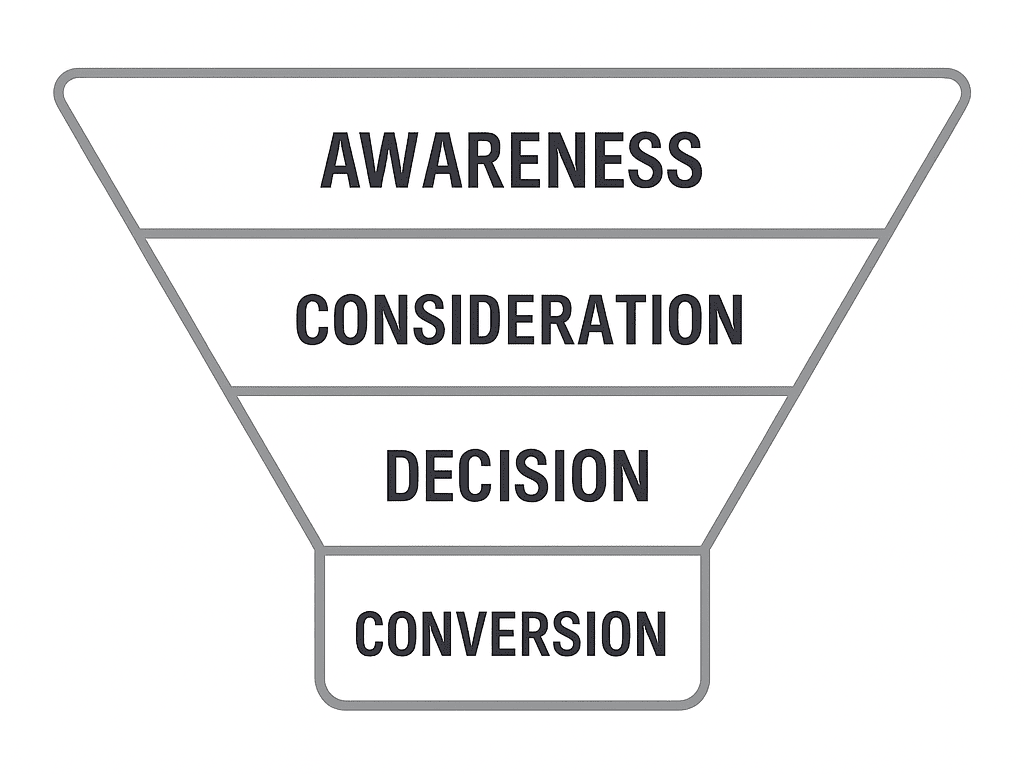
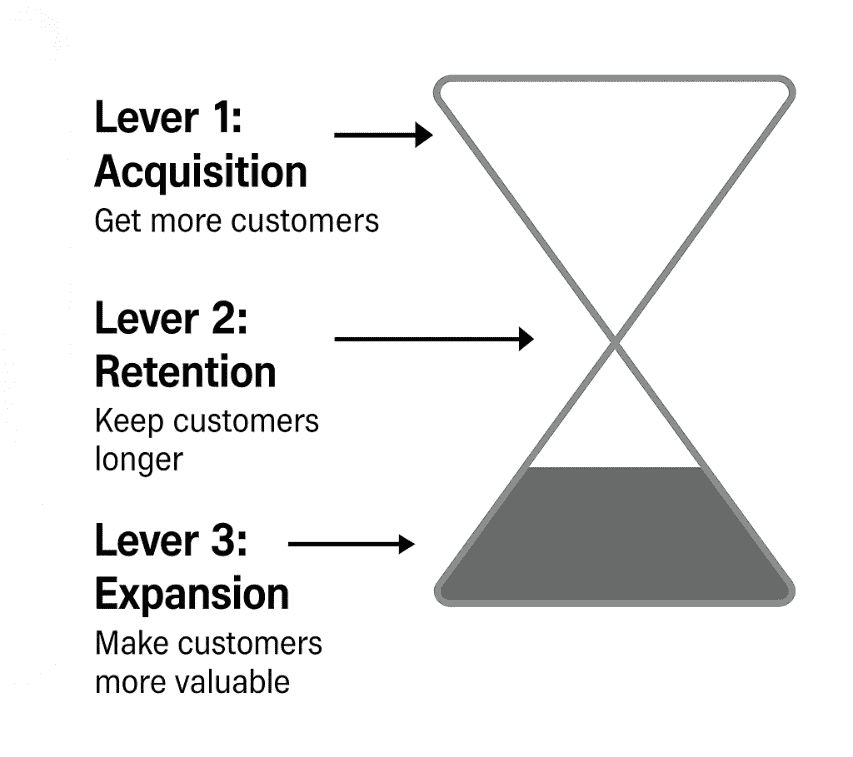
The Hourglass Funnel (After the Sale)
Most people stop at conversion.
That’s a mistake.
Real businesses grow through:
- Retention – keeping customers longer
- Expansion – increasing lifetime value
This is where trust compounds and growth becomes predictable.
Acquisition fills the funnel.
Retention and expansion grow the business.
Why Most Funnels Fail
Funnels fail when:
- They are disconnected from channels
- They try to sell too early
- They don’t help prospects name their problem
- They don’t build a mental model
A funnel is not a trick.
It’s a guided learning experience.
The Correct Mental Shift
Stop asking:
“How do I get more traffic?”
Start asking:
“How do I move people step by step from attention to decision?”
When you:
- Control entry points
- Match content to awareness levels
- Use clear CTAs
- Measure each step
You stop guessing — and start building.
Marketing Is a System, Not a Tactic
Digital marketing is not:
- Posting more
- Buying more ads
- Adding more tools
It is:
- Designing intentional paths
- Aligning channels and funnels
- Educating before selling
- Building trust before asking
When these pieces work together, attention naturally becomes customers.
And once you understand this system, you stop chasing hacks and start building assets.
Marketing stops being stressful when the system is clear.
Final Perspective
Traffic is not the bottleneck.
Attention is not the bottleneck.
Structure is.
When structure is clear, growth becomes logical, measurable, and repeatable.
That’s when digital marketing stops feeling chaotic — and starts behaving like a real business system.
“Certain conceptual elements used in this article are inspired by the work Software as a Science: Unlock Limitless Recurring Revenue Without Losing Control by Matt Verlaque, Johnny Page, and Dan Martell. This reference is included solely for attribution purposes.”
Further Reading On This Topic
The following articles are part of the same content cluster and expand on concepts referenced above:






Comments (0)