
How a new paradigm lets you build only what you need, when you need it. For years, building a website meant paying upfront for infrastructure you didn’t need yet—locked into fixed plans with no traffic, no sales, and no certainty. This article explains why that model fails, what’s truly at stake if nothing changes, and how a new modular approach lets you regain control, pay only for real usage, and build a platform that actually converts...
How a new paradigm lets you build only what you need, when you need it. For years, building a website meant paying upfront for infrastructure you didn’t need yet—locked into fixed plans with no traffic, no sales, and no certainty. This article explains why that model fails, what’s truly at stake if nothing changes, and how a new modular approach lets you regain control, pay only for real usage, and build a platform that actually converts...





Creating a Website Shouldn’t Feel Like a Trap

Frank Arellano
Founder of Plexotrade LLCFor years, creating a website followed a frustrating pattern. You paid a large upfront cost, locked yourself into long-term plans, and accepted fixed prices — even when your site had no traffic, no sales, and no real traction yet.
You were forced to guess your future needs and pay for them in advance.
That’s not growth.
That’s risk.
And for most founders, creators, and small businesses, this model quietly drains money before results ever appear.
Why the Old Model Fails and What Replaces It?
What’s at Stake If Nothing Changes
- You keep paying for infrastructure you’re not using
- You stay dependent on a single provider
- Scaling feels scary instead of exciting
- You don’t truly own or control your platform
This is exactly why a new paradigm emerged.
The New Paradigm: You Pay for Reality, Not Hope
Modern websites no longer rely on one giant, monolithic hosting provider.
Instead, they are built as modular ecosystems, powered by cloud and edge computing principles.
What that means for you — without technical language:
- You start small
- You only pay when something is actually happening
- You scale when reality demands it
- You can pause, upgrade, or change components without breaking everything
You regain control.
This article shows you the real-life structure behind that system — not as theory, but as a practical, proven setup we use ourselves and for our clients.
Think of it as a map, not a manual.
Step 1: The Brain of Your Website
The Pain
Traditional hosting keeps your site “on” all the time — even when nobody is visiting.
You pay anyway.
That’s like running a store fully staffed, lights on, doors open… at 3 a.m.
The Risk
- Money burned every month
- No flexibility during early stages
- Fear of experimentation
The Solution
This is where Heroku comes in.
Heroku runs the logic of your website — the part that makes everything work — but with a crucial difference:
- You can start at $5–$7
- Your site can pause itself when inactive
- It wakes up automatically when someone visits
- You upgrade only when growth justifies it
You stop paying for imaginary traffic.
You pay for real usage.
This is where your website thinks.
Why Your Platform Shouldn’t Run 24/7 If No One Is There?
Step 1.1: Stability Without Chaos
The Pain
Projects break when updates are messy.
Teams lose track of changes.
Clients don’t know what’s happening.
The Risk
- Confusion
- Delays
- Lost trust
The Solution
GitHub acts as the single source of truth.
Even if you never touch code, it gives you:
- Clear version control
- A professional workflow
- Structured collaboration
When projects grow, chaos becomes expensive.
Structure keeps everything predictable.
Why Professional Projects Don’t Live on Your Laptop?
Step 2: Your Identity on The Internet
The Pain
Many businesses treat their domain as an afterthought.
They use generic emails.
They rely on platforms they don’t control.
The Risk
- Low credibility
- Weak brand perception
- Poor deliverability
The Solution
Squarespace handles your digital identity:
- Domain ownership
- Professional email forwarding
- Clean DNS management
Your domain becomes your permanent address, not a rented profile.
You look serious.
You sound legitimate.
You’re easier to trust.
Why Your Domain Is More Than a Name?

Step 3: Speed, Protection, and Global Reach
The Pain
Slow websites lose users.
Unprotected sites attract attacks.
Downtime kills credibility.
The Risk
- Visitors leave
- SEO suffers
- Your platform feels fragile
The Solution
Cloudflare sits between the world and your site.
- Delivers content from the closest location to the user
- Absorbs malicious traffic
- Adds an invisible layer of protection
You don’t fight performance or security manually.
It happens automatically.
Why Distance and Attacks Shouldn’t Be Your Problem?
Step 4: Where Your Data Actually Lives
The Pain
Your content, users, and products are your business — yet many platforms lock that data inside their systems.
The Risk
- Vendor lock-in
- Migration nightmares
- Loss of ownership
The Solution
Supabase stores your raw data securely:
- Products
- Blog posts
- User information
You own it.
You can move it.
You control access.
Your business memory stays yours.
Why Your Business Needs a Safe Memory?
Step 5: Media Without Weight
The Pain
Media-heavy websites feel slow.
Storage costs feel unpredictable.
The Risk
- Poor user experience
- Rising bills
- Infrastructure bottlenecks
The Solution
Amazon Web Services — specifically S3 — handles media separately:
- Images
- Audio
- Downloads
This keeps your platform light, fast, and cheap.
At real scale, this often costs less than $1/month.
Why Images and Videos Shouldn’t Slow Everything Else Down?
Step 6: Speed Without Strain
The Pain
Databases are powerful — but querying them constantly is slow and expensive.
The Risk
- Performance drops
- Higher costs
- Security exposure
The Solution
Redis stores frequently used data in memory.
Your site responds instantly.
Your database works less.
Your system becomes resilient.
This is optimization without complexity.
Why Repeating the Same Work Is Wasteful?
The Big Picture: Why This Changes Everything
This isn’t about tools.
It’s about control.
- Nothing is oversized
- Nothing is locked
- Everything can evolve
Each part does one job well.
No single point of failure.
No forced upgrades.
No artificial limitations.
The Result
- Freedom to start small
- Confidence to scale
- Ownership of your data
- Predictable costs
- Professional credibility
That’s why this is the modern paradigm:
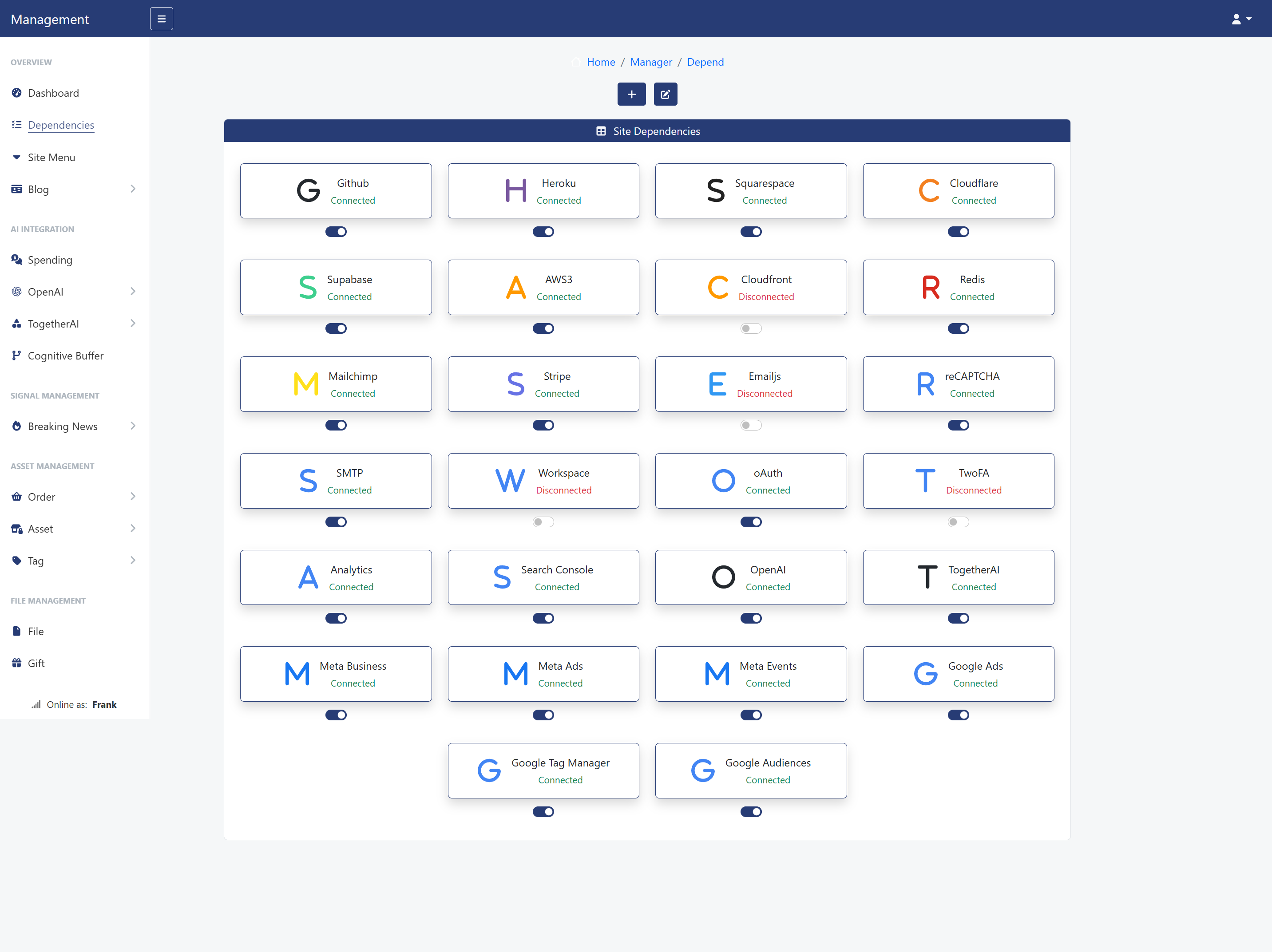
- Heroku – runs the software (for example, our solutions) and acts as the central connection point
- GitHub – hosts the software and feeds deployments into Heroku
- Squarespace – handles domain hosting and email forwarding
- Cloudflare – manages DNS propagation and adds an extra layer of security
- Supabase – stores and securely delivers your data and your users’ data
- Amazon Web Services (S3) – provides fast and secure media delivery
- and Redis – accelerates your site by caching key data in memory
And this is exactly how Plexotrade LLC, through Plexosoft, builds platforms that don’t just exist — they convert attention into clients.
You don’t need to understand the technology. You just need to understand this:
- You’re no longer wasting your money.
- You’re building a platform that converts.
You don’t have a product or service problem. You don’t have a business problem either. You have a software problem. When you’re ready, the solution is already here.
Not Just a Website. A Platform With Real Marketing Tools That You Own.
Use the PLEXOSOFT coupon at checkout and enjoy 20% off any product or service on our site.
Further Reading On This Topic
The following articles are part of the same content cluster and expand on concepts referenced above:





Comments (0)